My fascination with Rubik’s Cubes started in third grade at a playdate. A fourth grader, who I was convinced was basically a genius, solved a 3×3 cube in under a minute right in front of me. I remember just staring at him, thinking, I need to learn how to do that.
That night, I went home determined. With a few steps he had shown me and a YouTube tutorial my dad pulled up (which felt like striking gold), I spent hours pausing, rewinding, and practicing. By the next day, I could solve it myself in under a minute. I don’t think I’d ever felt that specific kind of satisfaction before the moment when confusion flips into clarity.
RUBIK'S CUBE
From Chaos to Clarity More than a Cube

But solving one cube wasn’t enough.
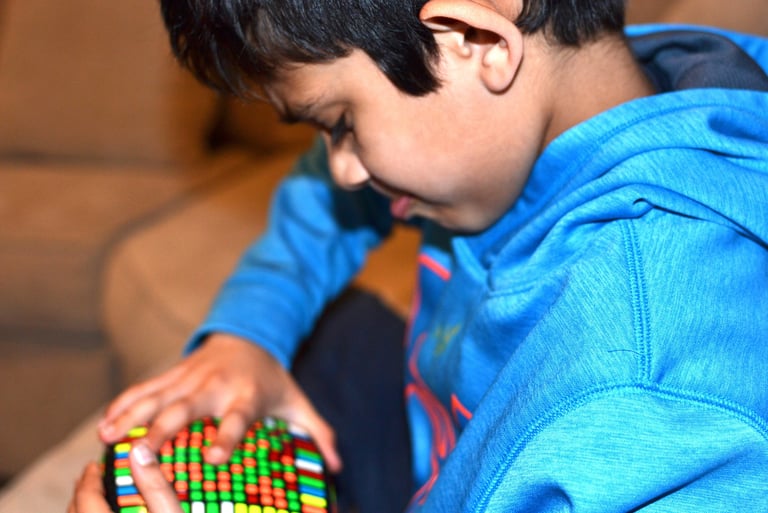
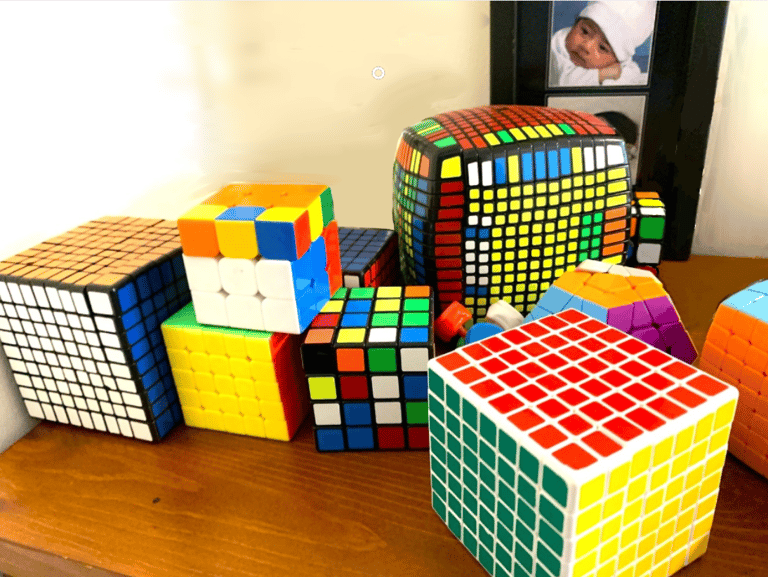
My dad ordered a 4×4, and I taught myself how to solve it using online guides and a lot of trial and error. Then came the 5×5. Then the 7×7. Eventually the 9×9, 12×12, 13×13, and 15×15. With each new size, the patterns became more complex, and I had to think more abstractly, visualizing layers, anticipating parity errors, and sometimes inventing my own algorithms when I couldn’t find clear instructions. What started as imitation turned into independent problem-solving.
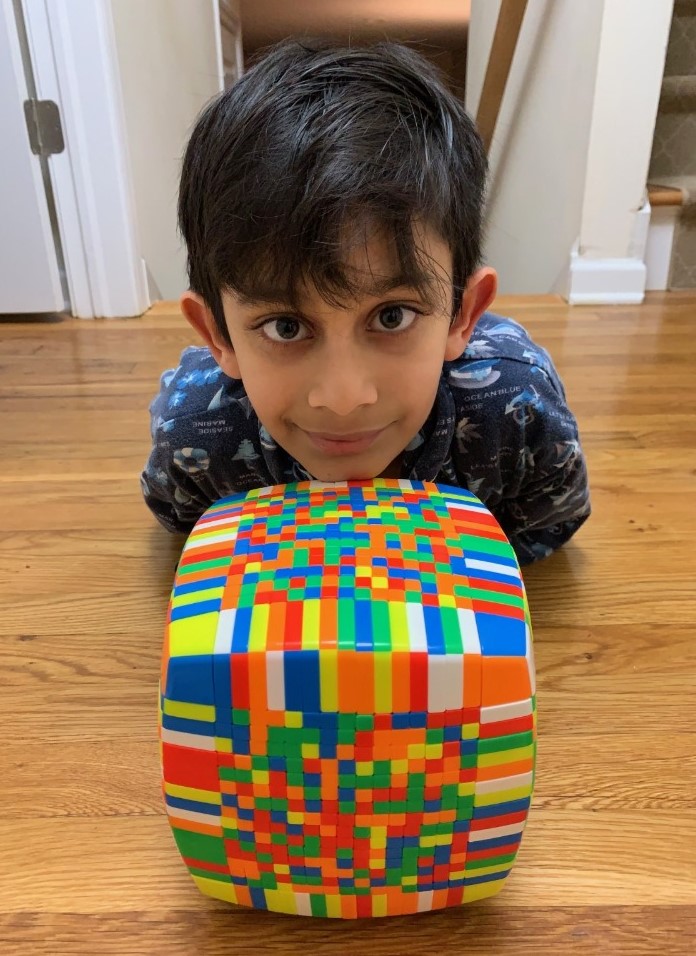
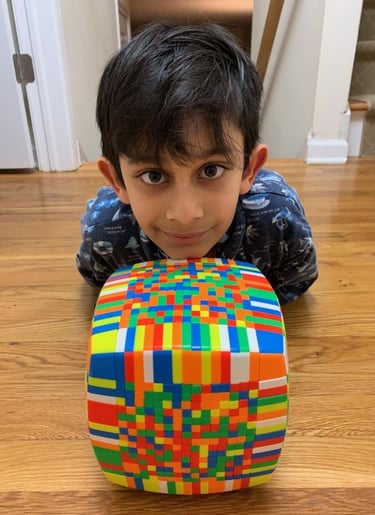
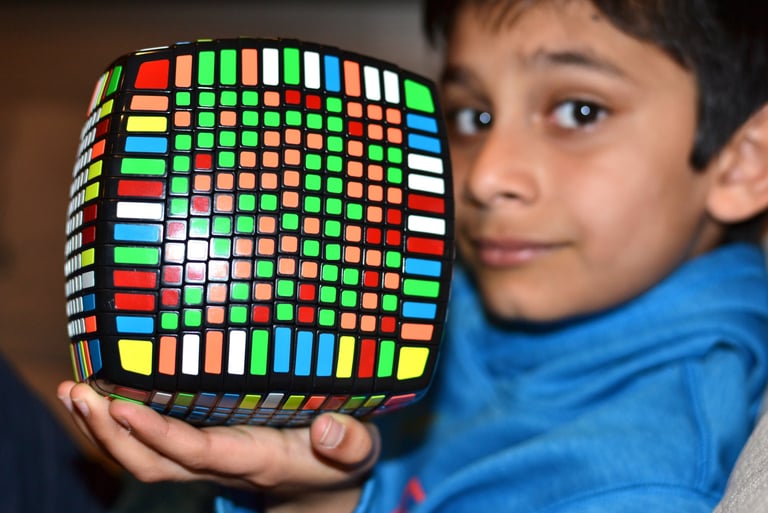
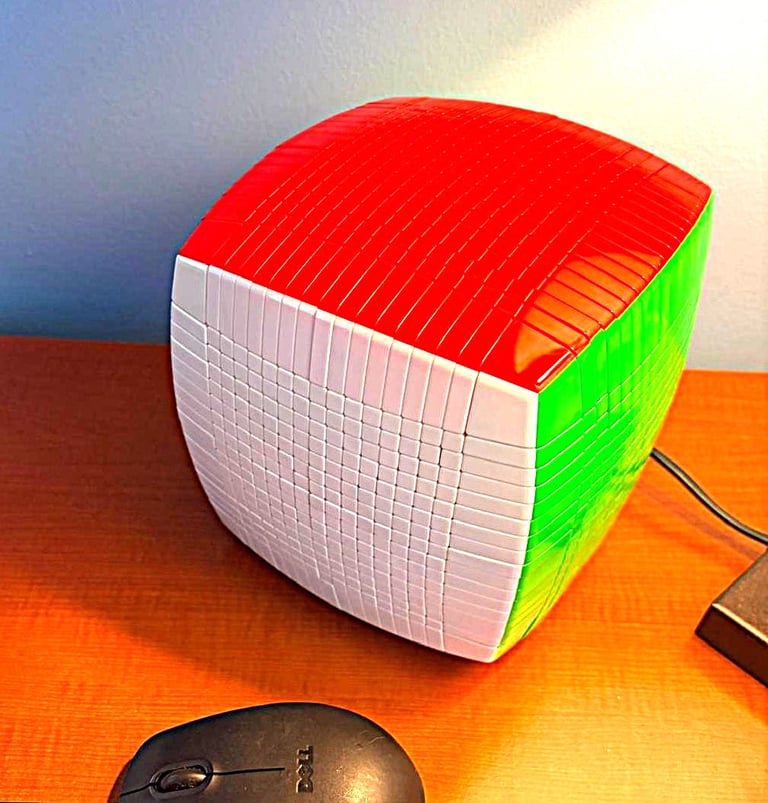
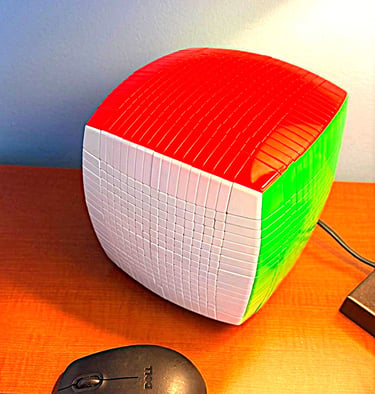
Finally, we ordered the 17×17, the largest cube in production at the time, shipped all the way from Hong Kong. It was enormous, heavier than it looked, and stiff enough that turning a single row required actual force. Every afternoon after school, I’d sit down and work through it, piece by piece, watching disorder slowly organize itself. It took nearly a week of steady effort, but I solved it!
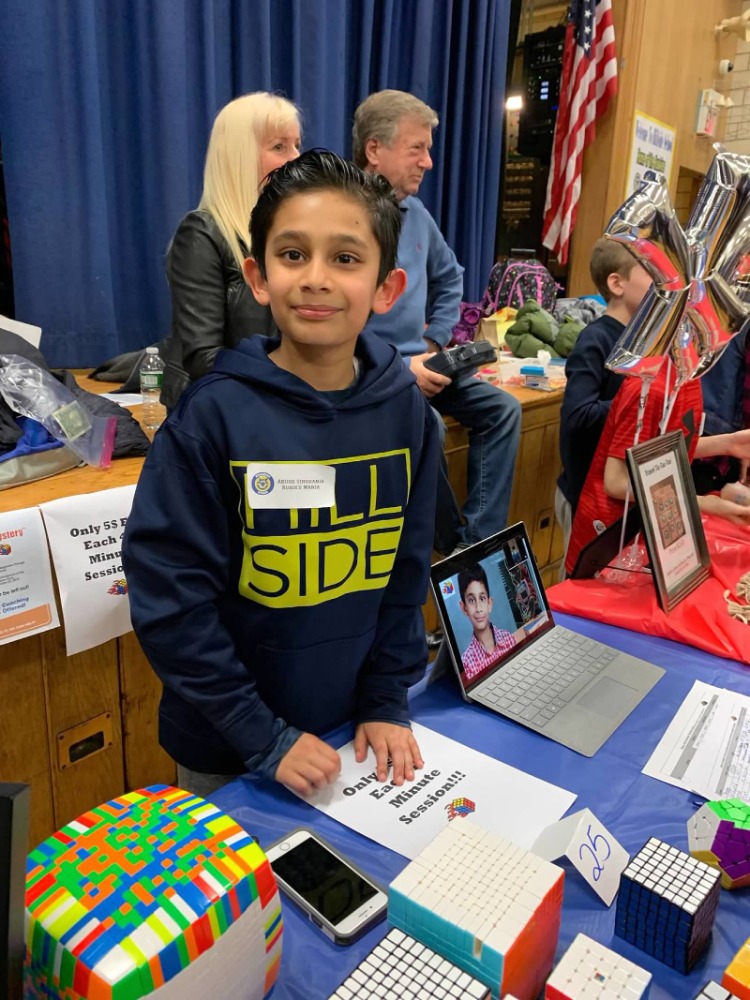
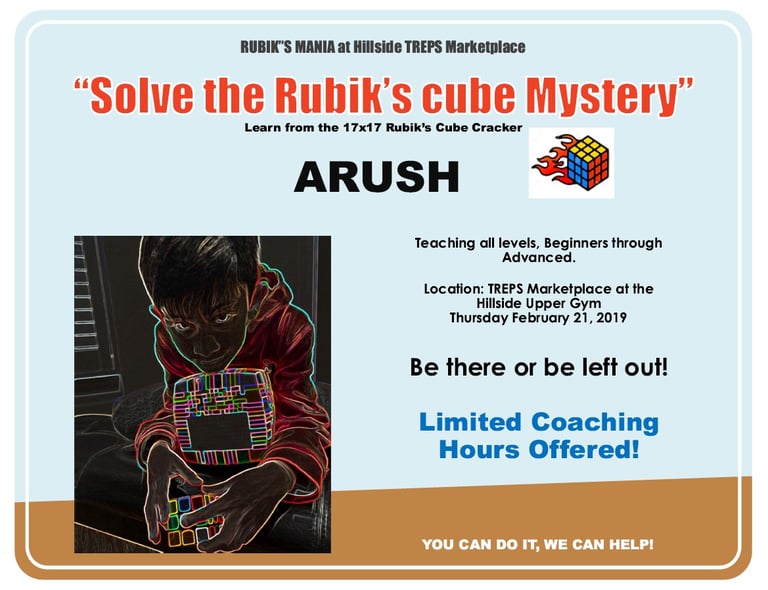
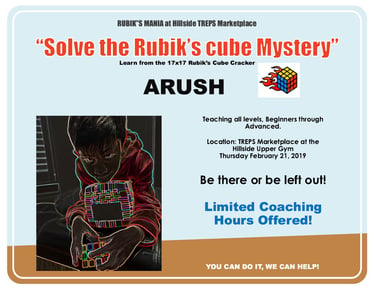
In fifth grade, I turned that obsession into something a little unexpected. Through my elementary school’s TREPS program, I ran a stall offering cube-solving coaching to other students. What started as something I loved doing alone became something I could teach, and surprisingly, it was a hit.
Today, all of those cubes still sit on my dresser at home. They’re more than puzzles to me. They’re reminders of the thrill of tackling something that seems impossible at first glance, and of the patience, logic, and persistence it takes to transform complexity into clarity.